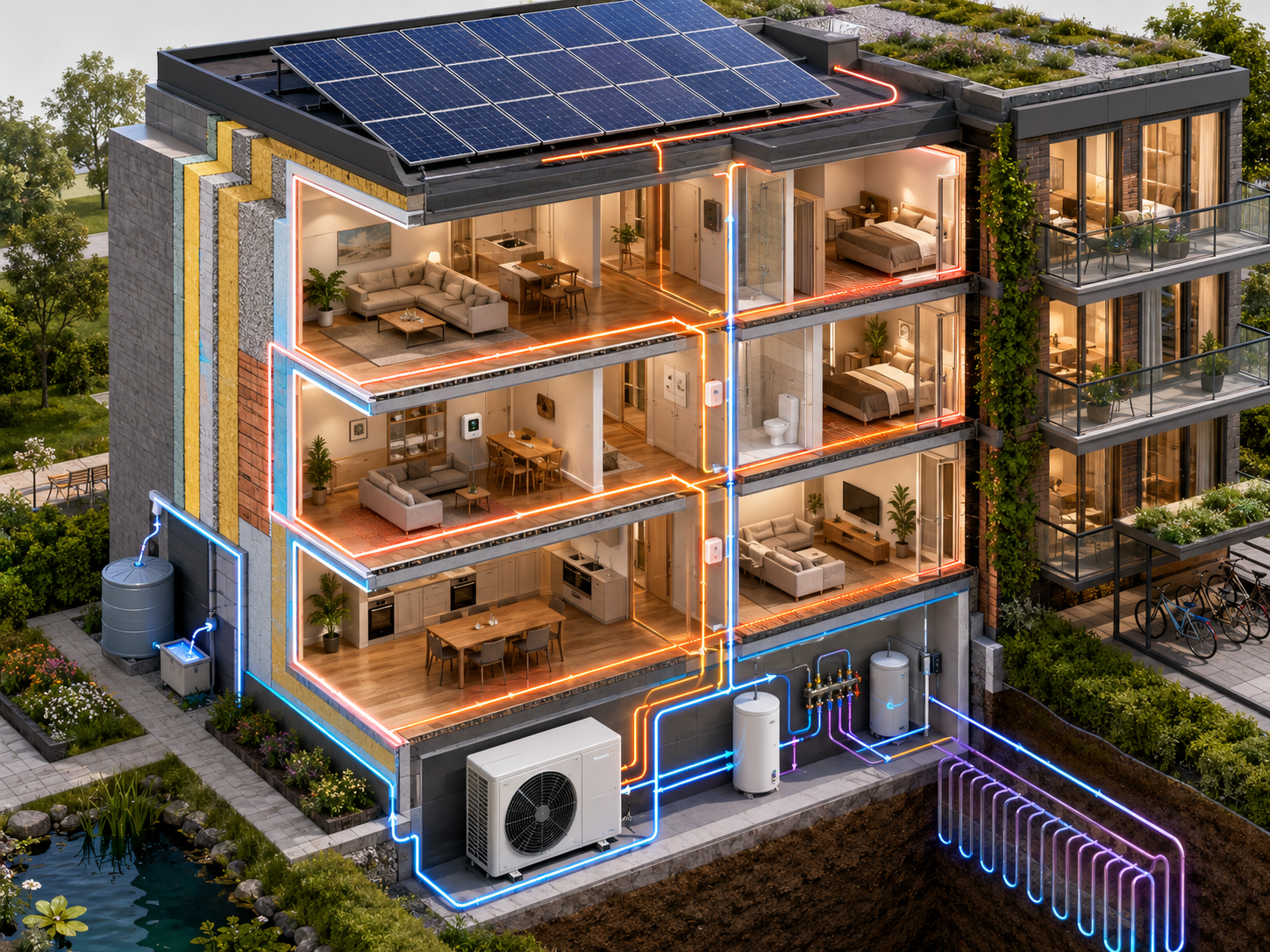
Heat Pumps and Sustainable Buildings
Sustainable buildings are designed to use energy, materials, and resources more efficiently. They aim to provide comfort for people while reducing environmental impact. Heat pumps can support this goal by offering efficient heating and cooling for homes, commercial buildings, and multi-unit developments.
Instead of creating heat directly by burning fuel, heat pumps transfer heat from air, ground, or water. This makes them an important technology for buildings that are moving toward cleaner and more efficient energy use.
Why Heat Pumps Matter in Sustainable Design
Heating and cooling are major parts of building energy consumption. A building may have solar panels, efficient lighting, and good materials, but if its heating and cooling system is inefficient, it can still use a large amount of energy.
Heat pumps help address this issue by providing heating and cooling in a more efficient way. They can reduce energy waste and support lower-emission building operations, especially when powered by cleaner electricity.
The Building Envelope Comes First
A heat pump works best when the building itself is energy efficient. This means the building should be designed or upgraded to reduce heat loss in winter and heat gain in summer.
Important building envelope strategies include:
Good insulation
Air sealing
High-performance windows
Low-E glass
Efficient doors
Cool roofs
Proper shading
Thermal bridge reduction
When the building envelope performs well, the heat pump does not need to work as hard. This can improve comfort, reduce energy use, and support better long-term performance.
Heat Pumps and Solar Panels
Heat pumps can work very well with solar photovoltaic systems. Solar panels generate electricity, and heat pumps use electricity to provide heating and cooling.
This combination can help buildings reduce their dependence on fossil fuels and make better use of clean energy. For many sustainable building projects, solar panels and heat pumps can become part of the same energy strategy.
Heat Pumps and Energy-Efficient Materials
Heat pumps are most effective when supported by energy-efficient materials and smart building design. Materials such as high-quality insulation, insulated concrete forms, Low-E windows, and reflective roofing can reduce the heating and cooling load.
This means the heat pump can operate more efficiently because the building needs less energy to stay comfortable.
Smart Controls and Better Comfort
Sustainable buildings are not only about saving energy. They are also about creating healthier and more comfortable spaces.
Smart thermostats, zoning controls, sensors, and proper system design can help heat pumps deliver the right amount of heating or cooling to the right areas. This can reduce energy waste while improving indoor comfort.
Lower-Emission Buildings
Because heat pumps use electricity instead of directly burning fuel inside the building, they can help reduce on-site emissions. As electricity grids become cleaner, heat pumps can become an even stronger part of low-carbon building strategies.
This makes them useful for homeowners, businesses, developers, and communities that want to improve energy performance and reduce environmental impact.
A Complete Sustainable Strategy
A heat pump alone does not make a building sustainable. It works best as part of a complete strategy that may include:
Efficient building design
Strong insulation and air sealing
Renewable electricity
Solar panels
Energy-efficient materials
Smart controls
Efficient water heating
Proper maintenance
Professional system design
When these elements work together, a building can become more comfortable, efficient, and resilient.
Final Thought
Heat pumps are more than just heating and cooling equipment. They are part of a larger movement toward smarter, cleaner, and more sustainable buildings.
By combining heat pumps with solar energy, efficient materials, better insulation, and smart design, homes and buildings can reduce energy demand while improving comfort and environmental performance.